It gets you. It gets your customers. It connects the dots.
- Everything about your brand, your buyers and your rivals, sorted and connected.
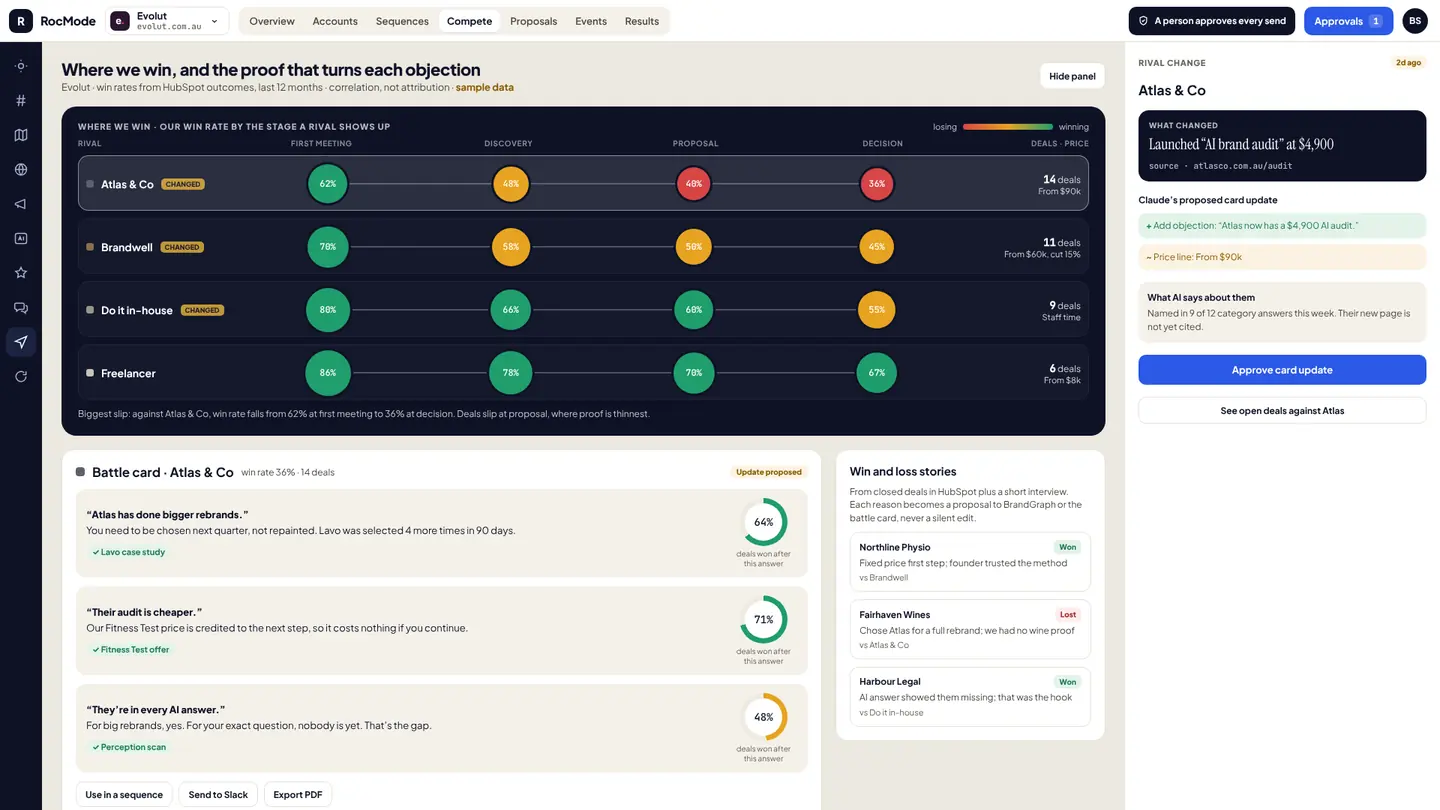
- Then it works out what to say, where, when and why. It’s the brain behind every step.
Security 35 facts
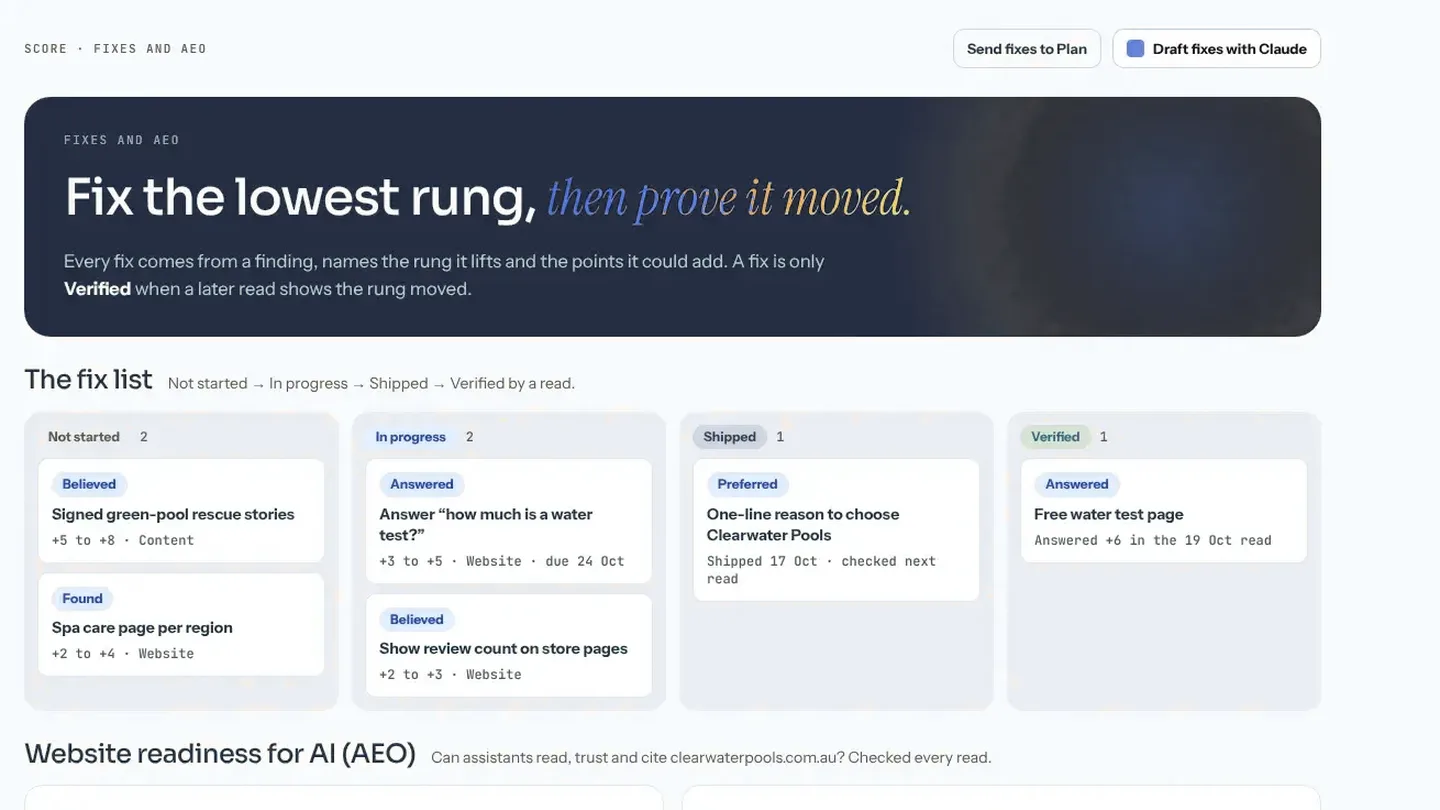
RocMode shows you whether AI picks you or your rival, finds the work that changes it, builds that work, and sends it to you to approve. Then it proves what moved.
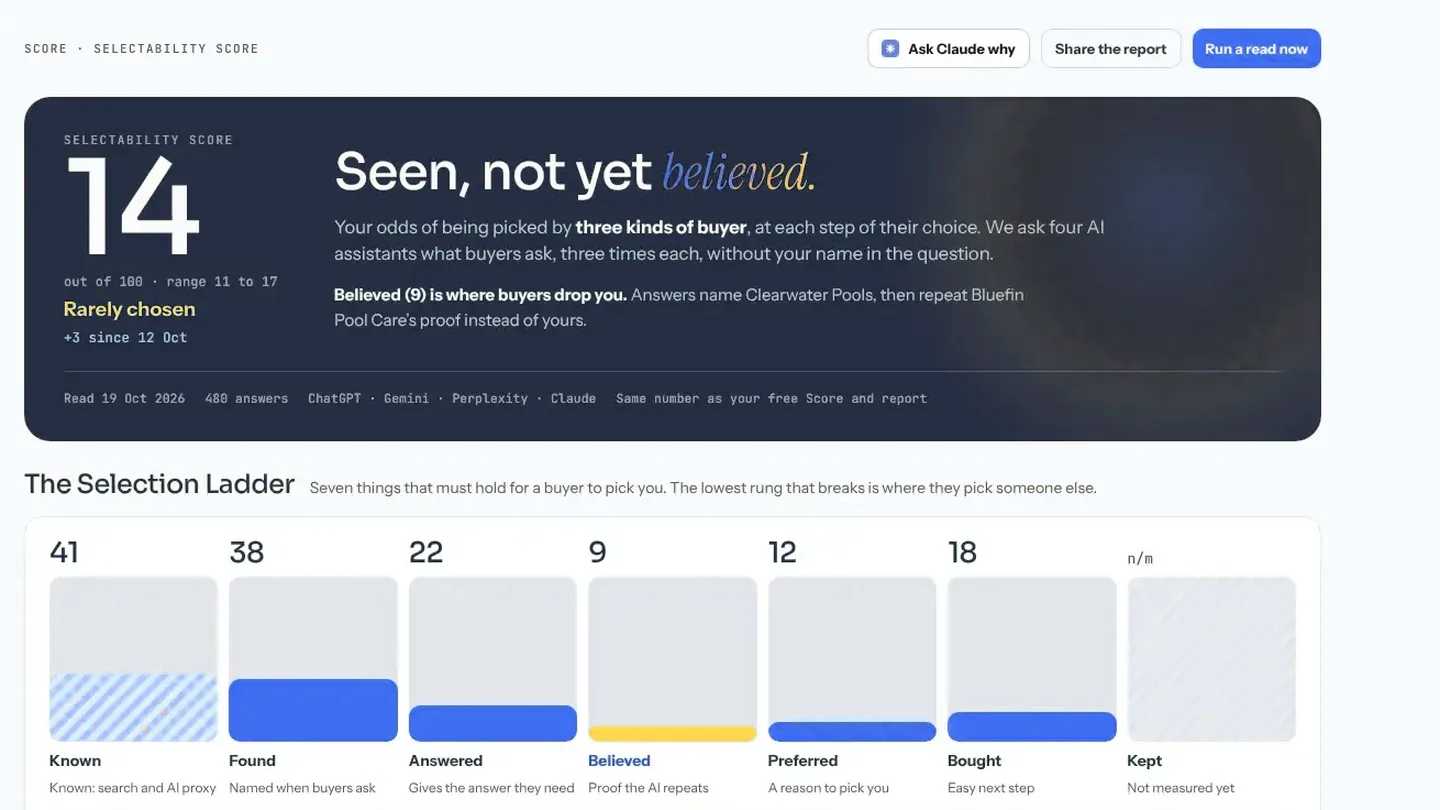
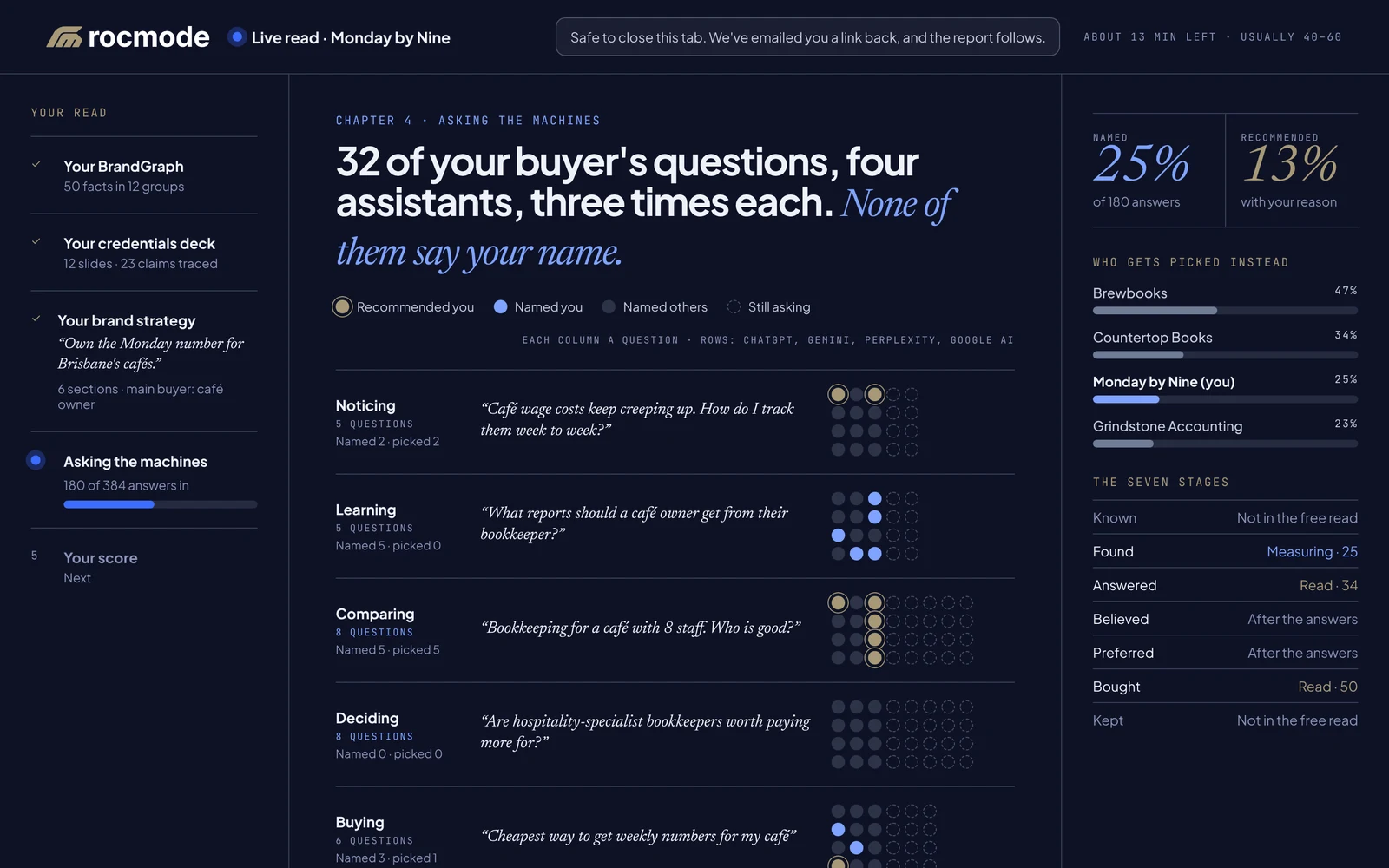
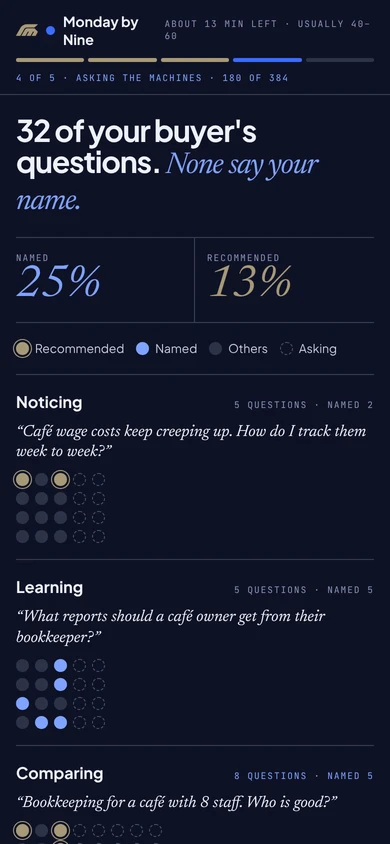
We ask ChatGPT, Claude, Gemini and Perplexity the questions your buyers ask, and show where they pick you and who they pick instead. Free, no login. What’s the Score? Or sign up free and try everything for 14 days.

Your website in. A whole marketing and sales team’s work out. RocMode learns your brand from your site, then does the work: strategy, website, ads, social, PR, partners, email, design, and the deck that wins the deal. You approve every piece.
Other tools do one job. This does all of them, as one story.
Other AI guesses. This works from your facts and proof.
Other tools stop at the post. This follows it to the signed deal, and learns what won.
None of this is your fault. Buyers changed how they choose, and most marketing hasn’t caught up.
The dashboards are green and the pipeline isn’t.
About half of new articles online are now written mainly by machines. Graphite, 55,400 URLs, 2026So AI and buyers hear five versions of you.
Not in a footnote. Nowhere.
Check yours free →Every era of marketing had its visibility number, and AI mentions are just the newest. Most AI tools still sell you visibility. But being mentioned isn’t being chosen, and for the first time you can measure the pick itself.
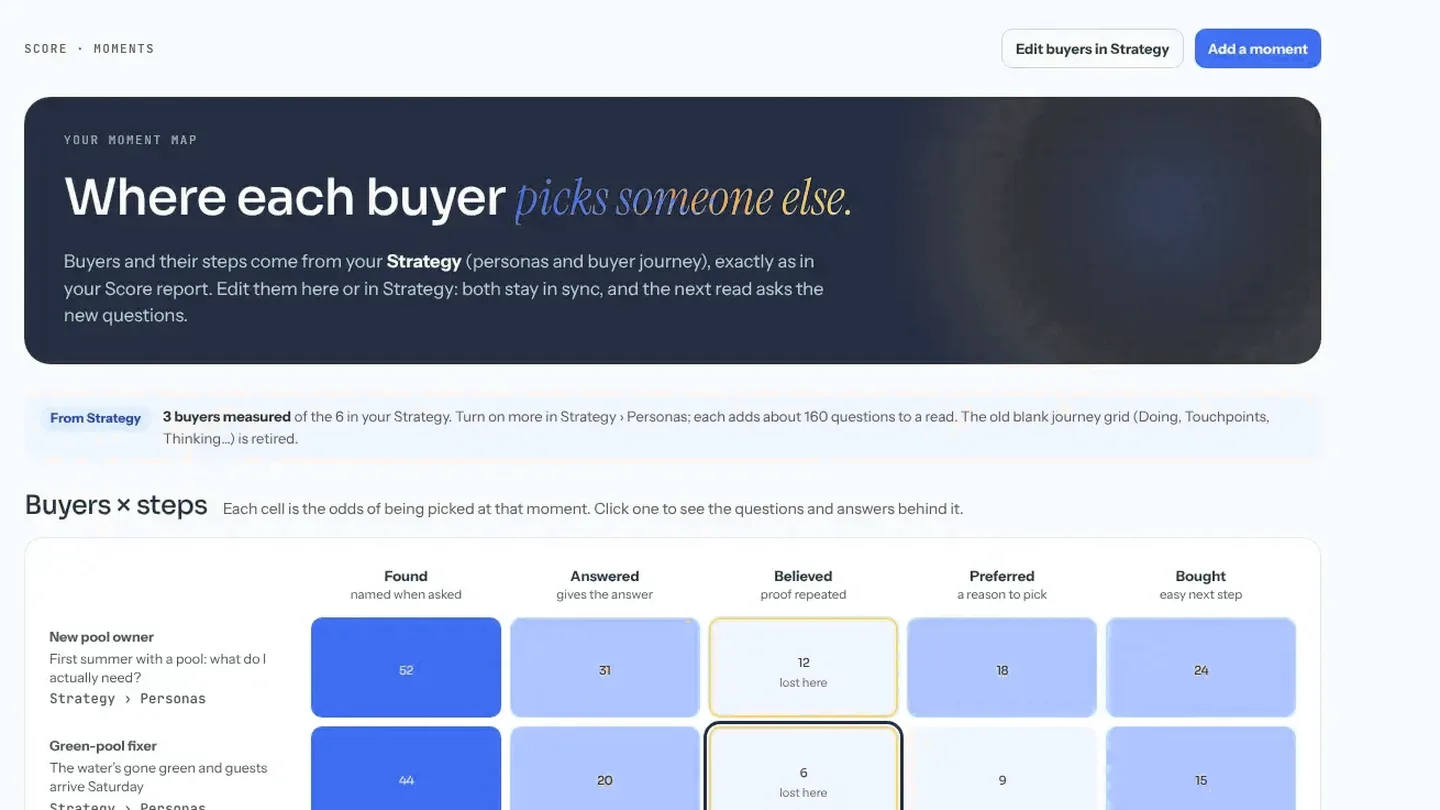
We ask the AI assistants your buyers use the questions they really ask, many times each, at every step of their journey. Then we show where you’re picked, where you’re passed over, and who wins instead.


RocMode runs on Seen Isn’t Selected and the free Selectability Playbooks. Read the thinking before you buy.
The book →We ask the assistants your buyers use, many times, at every moment, and report the rate with honest margins. Every finding has a receipt.
See a Score →The same system that finds the gap writes the page, the email and the deck that closes it.
How it works →Monday by Nine, the café bookkeeper from the book: who gets picked instead, where buyers are lost, and the three fixes that lift it most.
Open the sample →Same questions, same assistants, every month, with what we changed in between.
See our Score →The whole book. 206 pages, no email, no paywall. Plus the 10-minute manifesto and the Playbooks.
Read it free →Everything below runs on one BrandGraph, priced per brand. Start with the free Score, or try every plan free for 14 days. Cancel any time.
Your free Score shows where you’re picked, where you’re passed over, and who gets chosen instead.
Or sign up free →Your free Selectability Score asks the AI assistants the questions your buyers ask, without your name in them. You see who gets picked, at which moment, and the three gaps to fix first.
✓ Free✓ No login✓ Report by email, with a PDFThe Method · What is Selectability?
Visibility is the odds you're seen. Selectability is the odds a buyer, at a given moment, picks you over the alternatives, doing nothing included.
6sense, 2025: about 4,000 business buyers, purchases of US$25,000 or more.
Not a funnel. Each has to hold at the moment of choice, in whatever order the buyer meets them.
I've heard of you.
You show up when I look.
You answered my question.
I trust that it's true.
You're my first choice.
I bought.
I'd choose you again.
One kind of buyer, at one step, with one need, buying one way. One number for the whole brand hides exactly what you need to know.
5 kinds of buyer × 7 steps = 35 moments. More questions steady each reading; they never add moments.
Example: Monday by Nine, the invented café bookkeeper from the book. Dashed cells are moments that don't exist for this brand: left out, never counted as zero.
Known and Found are the gate. The other four are the quality of what buyers find. A brand nobody finds scores zero, however good its answers.
How do your buyers buy? The mode sets the weights.
Starts on the book's worked example: the café bookkeeper's first moment. Move anything.
√(Known × Found)55weighted average of the four38Gate × Quality ÷ 10021Rarely selected
The score is the weighted average of every moment, from 0 to 100. Moments nearer the decision, and your main buyers, count for more. Every score carries a range.
The same amount of presence scores higher spread across more moments. Being on more lists some of the time beats owning half of them.
Known and Found are the gate. The other four are the quality of what buyers find. A brand nobody finds scores zero, however good its answers.
How do your buyers buy? The mode sets the weights.
Starts on the book's worked example: the café bookkeeper's first moment. Move anything.
√(Known × Found)55weighted average of the four37Gate × Quality ÷ 10020Rarely selected
The score is the weighted average of every moment, from 0 to 100. Moments nearer the decision, and your main buyers, count for more. Every score carries a range.
The same amount of presence scores higher spread across more moments. Being on more lists some of the time beats owning half of them.
Two measures sort every moment. Hidden is the common one: you have the answer and nobody is sent to it.
They matter more than the formula. They're what stop the score becoming the next visibility number.
A score is only worth taking if it changes what you do next. Find the stage where each moment is lost, fix the biggest gap first, write down what you expect, then ask the same questions again.
Nobody has yet shown that a selectability score moves with market share. The weights are judgement until they're calibrated against real sales, and no measure of the odds outranks your own sales data. The method is published so you can check the working, or run it by hand for five moments this quarter.
Your main buyers, their moments, five questions at each, asked of five assistants. One score with its range, and the three gaps to fix first. Free.